Industrial Equipment
Industrial Equipment Condition Monitoring
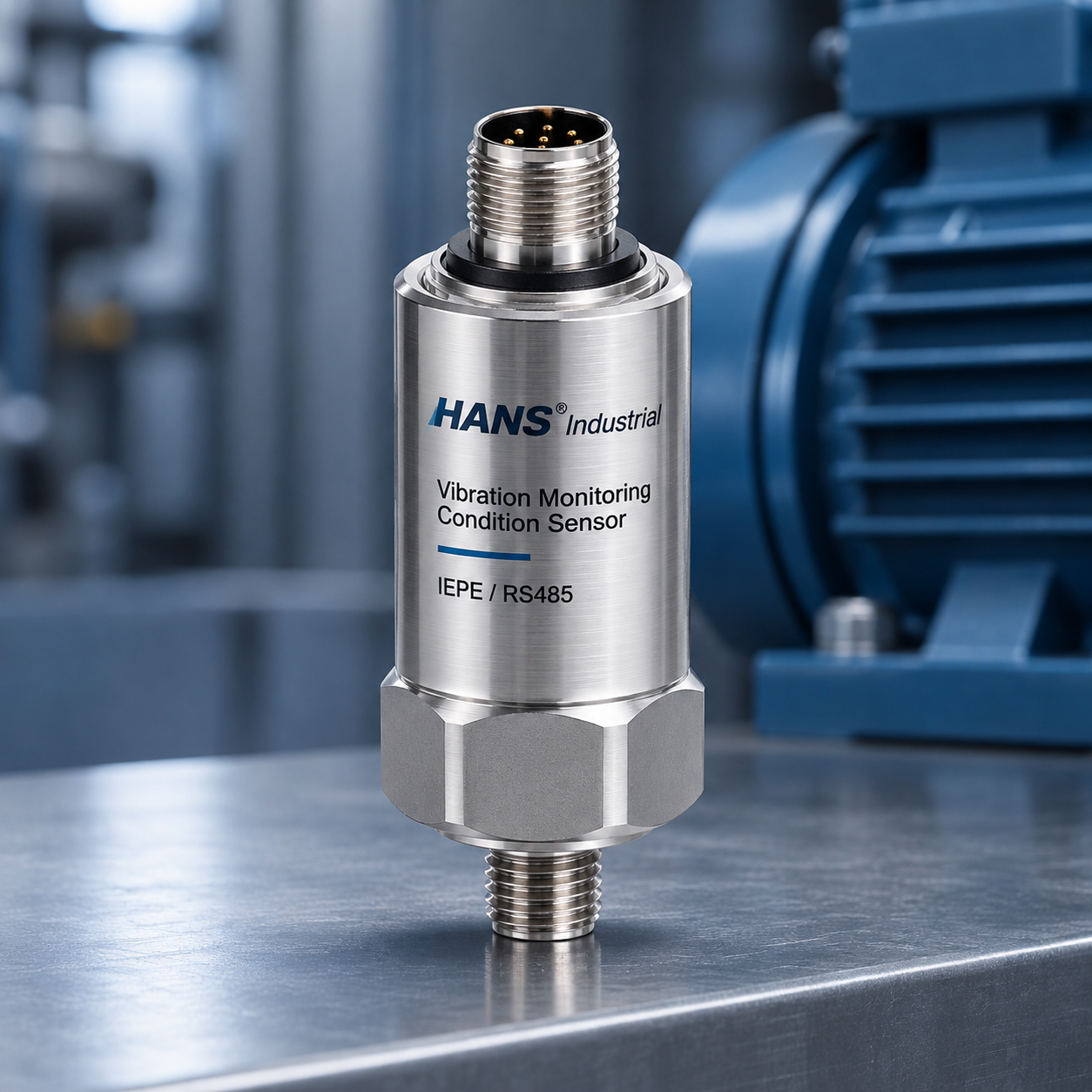
Monitor industrial rotating assets and instrumentation through model-matched vibration, temperature and operational sensors. Select between single-axis or three-axis devices and wired or wireless variants according to machine dynamics and deployment conditions.
Typical Assets
Pumps, motors, bearings, fans, compressors, gearboxes and production machinery.
Reference Architecture
Machine-mounted sensor → suitable Modbus/data acquisition interface or wireless receiver → configured monitoring and reporting system. Verify protocol, cabling, sampling characteristics and installation before operation.
FAQ
Does a 5k designation guarantee every waveform function? No. Measurement features depend on the complete model and suffix, not only the frequency designation.

INDUSTRY OVERVIEW
Condition monitoring reference systems for industrial machines, motors, pumps and gearboxes using vibration, temperature, acquisition and monitoring hardware.
KEY CHALLENGES
- Motors, pumps, fans, compressors and gearboxes have different vibration signatures, operating speeds and mounting constraints.
- Single-axis and three-axis sensors, measurement bandwidths, temperature classes and connectors must match the monitoring objective.
- Sensor output, sampling, cabling and acquisition interfaces must be compatible with the installed monitoring equipment.
- Alarm thresholds require operating context and site validation; a sensor reading is not, by itself, a diagnosis.
RECOMMENDED SOLUTIONS
- Define the monitored asset, measurement axes, frequency range, mounting point and operating temperature before selecting a vibration sensor.
- Choose wired RS-485/Modbus or IEPE acquisition where documented; use wireless devices only with a confirmed receiver and communication pairing.
- Connect selected measurements to a compatible data acquisition unit or gateway and configure trend history and threshold review.
- Validate installation, sensor orientation, data quality and alarm settings during commissioning.
KEY BENEFITS
- Improve condition visibility for selected rotating and production equipment.
- Build consistent measurement histories to support maintenance planning and troubleshooting.
- Support remote monitoring and configurable alerts when the device and network architecture allow.
- Keep sensor selection tied to the exact machine, mounting and measurement requirements.
RELATED PRODUCTS